Need help? Text us and our team of experts will reply in minutes
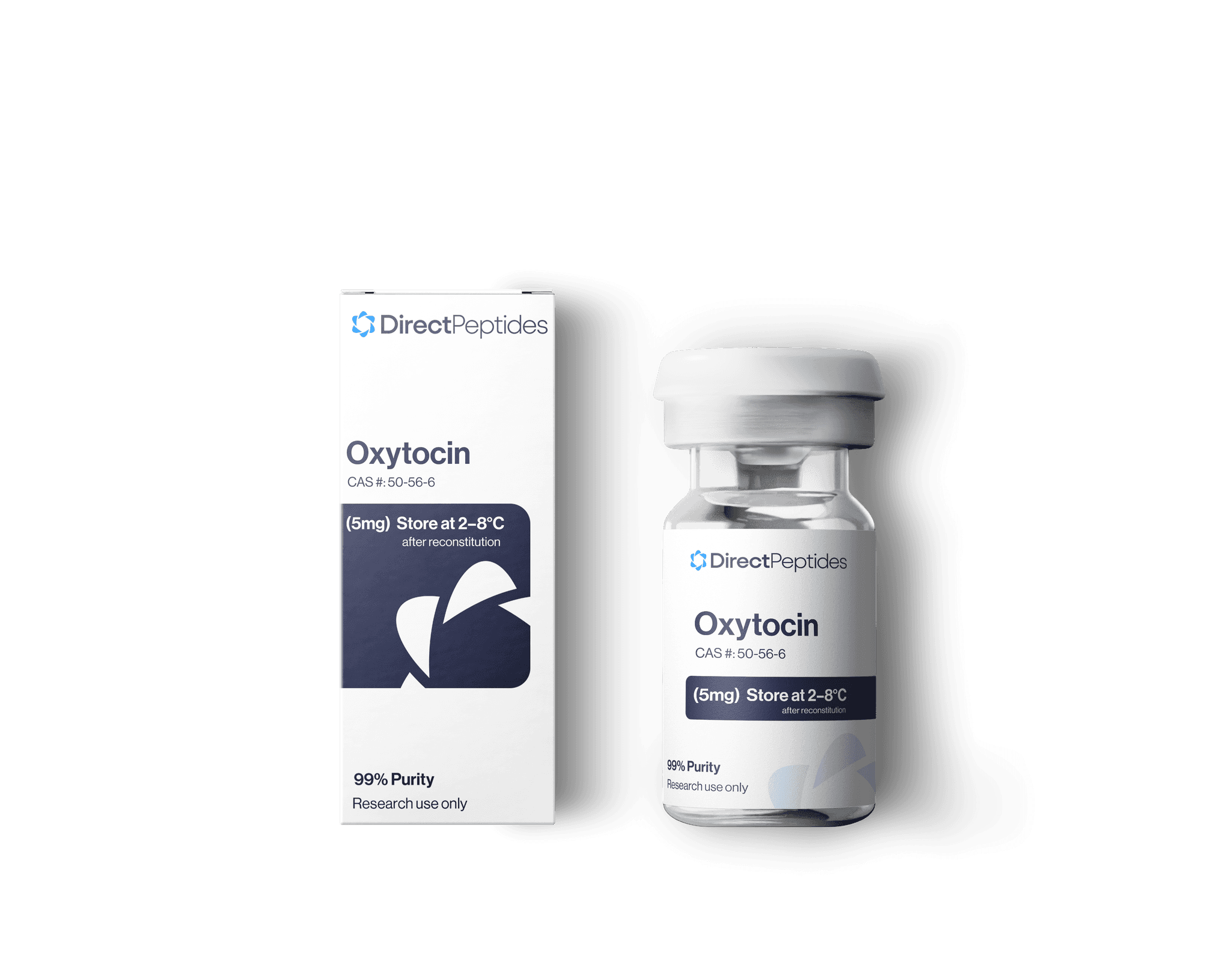
Research Use Only
All products are intended solely for laboratory research and are not for human or animal consumption. By purchasing, the buyer agrees to use these products in compliance with all applicable laws.
Oxytocin Overview
Oxytocin is a cyclic nonapeptide with a disulfide bridge between cysteine residues at positions 1 and 6, synthesized as a prohormone in hypothalamic magnocellular neurons and transported to the posterior pituitary for release. Through binding to its target receptor (OXTR), a G-protein-coupled receptor, it activates phospholipase C-mediated pathways leading to intracellular calcium release and protein kinase C activation. Research models examine oxytocin's effects on smooth muscle signaling dynamics, myoepithelial contraction modeling, CNS behavioral pathways, stress response signaling, and autonomic nervous system modulation in laboratory settings.
Lee et al. (2009). Gimpl & Fahrenholz (2001).
History
Oxytocin was first isolated from the posterior pituitary gland by Henry Dale in 1906, who observed its smooth muscle signaling properties. The complete amino acid sequence was determined by Vincent du Vigneaud in 1953, and he successfully synthesized the peptide shortly thereafter, earning the Nobel Prize in Chemistry in 1955. This represented the first synthesis of a polypeptide hormone and established oxytocin as a foundational molecule in peptide biochemistry and neuroendocrinology.
Du Vigneaud et al. (1953).
Oxytocin Structure
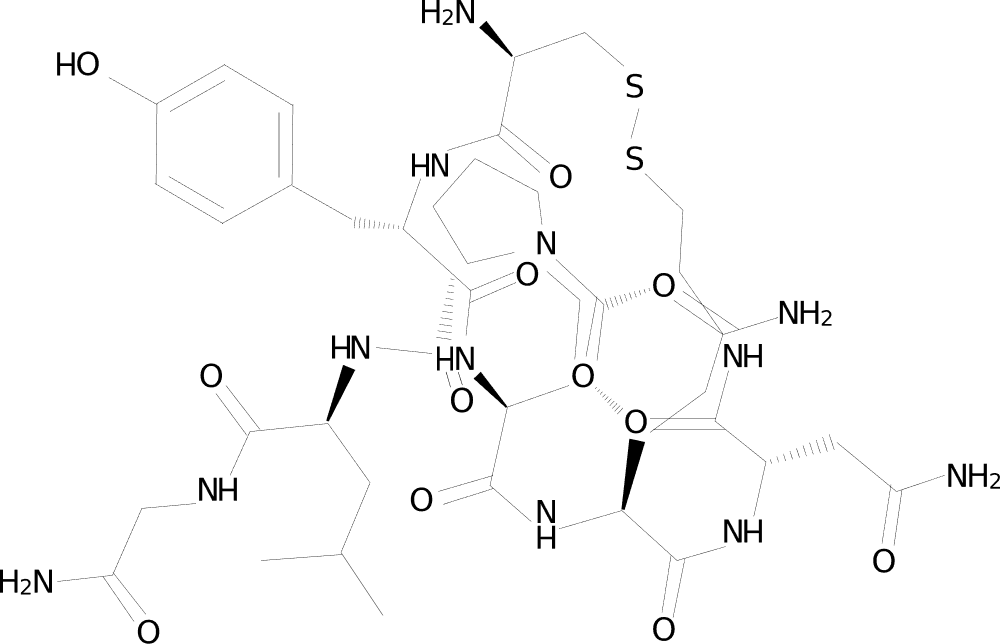
CAS#: 50-56-6
Molecular Formula: C₄₃H₆₆N₁₂O₁₂S₂
Molecular Weight: 1007.19 g/mol
PubChem ID: 439302
Research Findings
Oxytocin has been extensively studied in neuroendocrinology, behavioral neuroscience, and endocrine signaling research, with investigations focusing on receptor-mediated signaling, CNS behavioral pathways, autonomic function, and neuromodulation in various experimental models. Studies examine central and peripheral oxytocin system functions.
Key Areas of Research:
Endocrine: Smooth muscle signaling, contraction dynamics, secretory pathways
CNS: Behavioral pathways, affiliation modeling, recognition
Neuroendocrine: HPA axis modulation, stress signaling, autonomic dynamics
Signaling: Neurotransmitter modulation, synaptic plasticity, reward pathways
These findings demonstrate oxytocin's diverse actions across reproductive, social, and stress-regulatory systems. As both a peripheral hormone and central neuropeptide, oxytocin provides a research framework for examining neuroendocrine integration, social cognition mechanisms, and autonomic nervous system regulation in diverse experimental contexts.
Lee et al., Progress in Neurobiology, 2009
References
Lee H.J. et al. (2009). Oxytocin: the great facilitator of life. Progress in Neurobiology, 88(2):127-151.
Gimpl G. & Fahrenholz F. (2001). The oxytocin receptor system: structure, function, and regulation. Physiological Reviews, 81(2):629-683.
Du Vigneaud V. et al. (1953). The synthesis of an octapeptide amide with the hormonal activity of oxytocin. Journal of the American Chemical Society, 75(19):4879-4880.
Our Process


Text us, our dedicated team is here to help
Reach out and get a response within minutes.

Frequently Asked Questions
Everything you need to know about our products and processes.
What's the actual amount in each vial?
Are additional supplies needed?
How long does a vial last?
Does the product come with instructions?
How should I store these products?

Verified compounds.
Ready to ship.
Need help? Text us, and a team member will reply in minutes.
© DirectPeptides 2026. All rights reserved.
All products on this site are for research and development use only. Products are not for human consumption of any kind. The statements made on this website have not been evaluated by the US Food and Drug Administration. The statements and the products of this company are not intended to diagnose, treat, cure, or prevent any disease.
Direct Peptides is a chemical supplier. Direct Peptides is not a compounding pharmacy or chemical compounding facility as defined under 503A of the Federal Food, Drug, and Cosmetic Act. Direct Peptides is not an outsourcing facility as defined under 503B of the Federal Food, Drug, and Cosmetic Act.
All products are sold for research, laboratory, or analytical purposes only, and are not for human consumption.